What’s your Potato Idea? Small changes, big impact at SDinGov 2026
At first glance, a potato might seem like an unusual conversation starter at a service design conference.
But at this year’s SDinGov, a simple question sparked dozens of conversations:
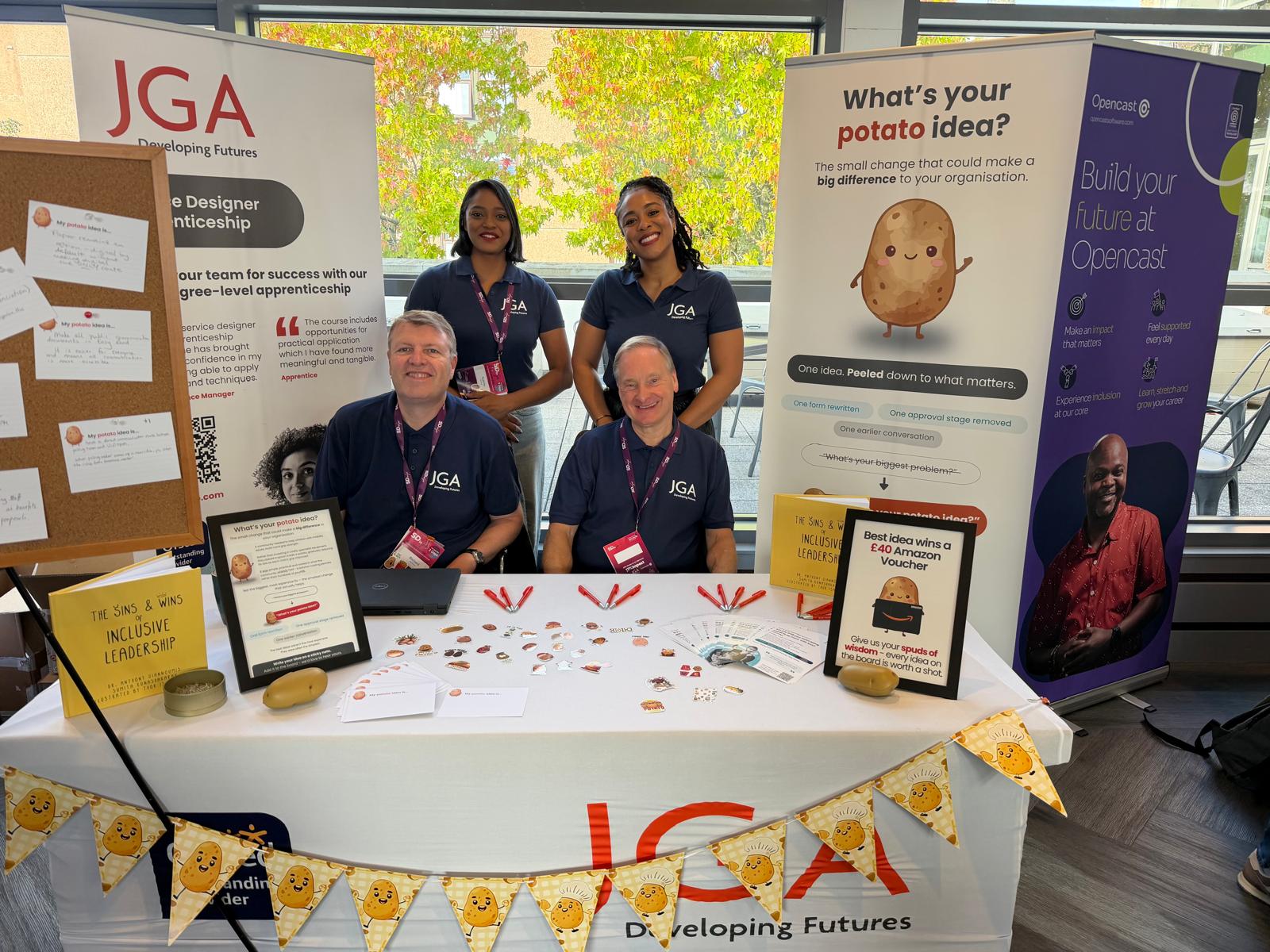
What’s your Potato Idea?
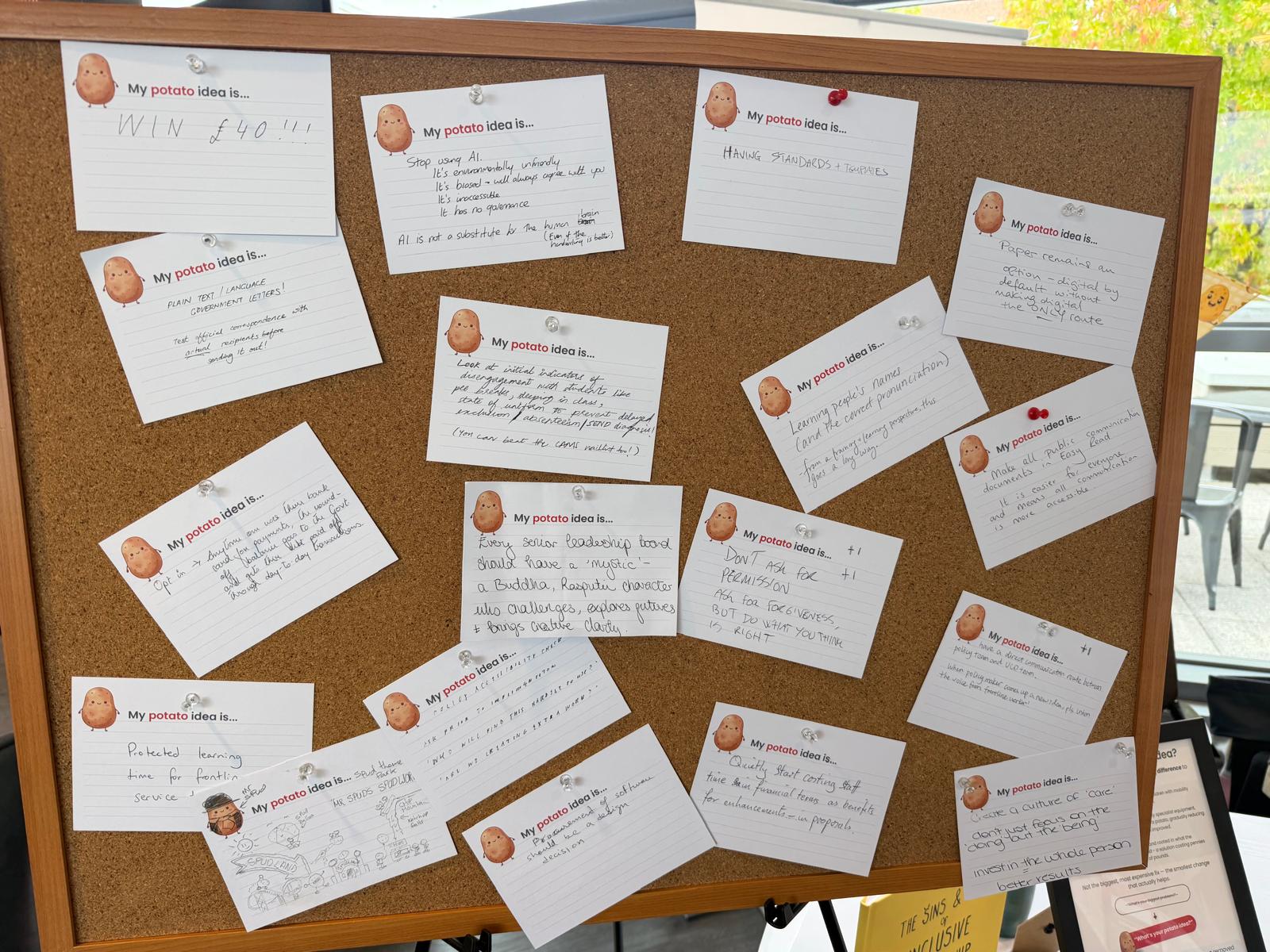
At SDinGov 2026, that question sparked dozens of conversations and a surprising collection of ideas from public sector professionals, service designers and change-makers.
The idea comes from a simple story. A community needed a way to help a child with mobility challenges build hand grip strength. Rather than purchasing specialist equipment, they used something they already had: a potato.
By placing a spoon handle into the potato, they created a larger, easier-to-grip surface. As the child’s strength improved, the potato became smaller until it was no longer needed.
Simple. Practical. Effective.
Not the biggest project. Not the most expensive solution. Just one small change that solves a real problem.
That’s a Potato Idea.
What is a Potato Idea?
A Potato Idea is a small, achievable improvement that can have a surprisingly big impact.
A Potato Idea is a small, achievable improvement that can have a surprisingly big impact.
It’s the form that’s rewritten in plain English. The unnecessary approval that’s removed. The conversation that happens earlier. The everyday frustration that’s finally fixed.

These ideas are often overlooked because they’re not flashy or headline-grabbing. Yet they’re frequently the things that make the biggest difference to people’s day-to-day experiences.
With that in mind, the JGA team headed to SDinGov 2026 with a simple question: What’s your Potato Idea?
Why we took a potato to service design in government
For those unfamiliar with it, SDinGov brings together service designers, public sector professionals and change-makers to explore how services can work better for the people who use them.
It’s also a great reflection of why we deliver our Level 6 Service Designer apprenticeship, helping professionals develop the skills to understand people’s needs, identify opportunities for improvement and design services that work better for the people who use them.
Alongside discussions on service design, accessibility and innovation, our team invited delegates to share their own Potato Ideas.
Armed with potato stickers and plenty of curiosity, Sumita Kunashakaran, Stephanie Umebuani, Richard Burgess and John Riley spent the day collecting ideas and starting conversations about the small changes that can create meaningful impact.
What started as a conference activity quickly evolved into something much bigger.
What we learned
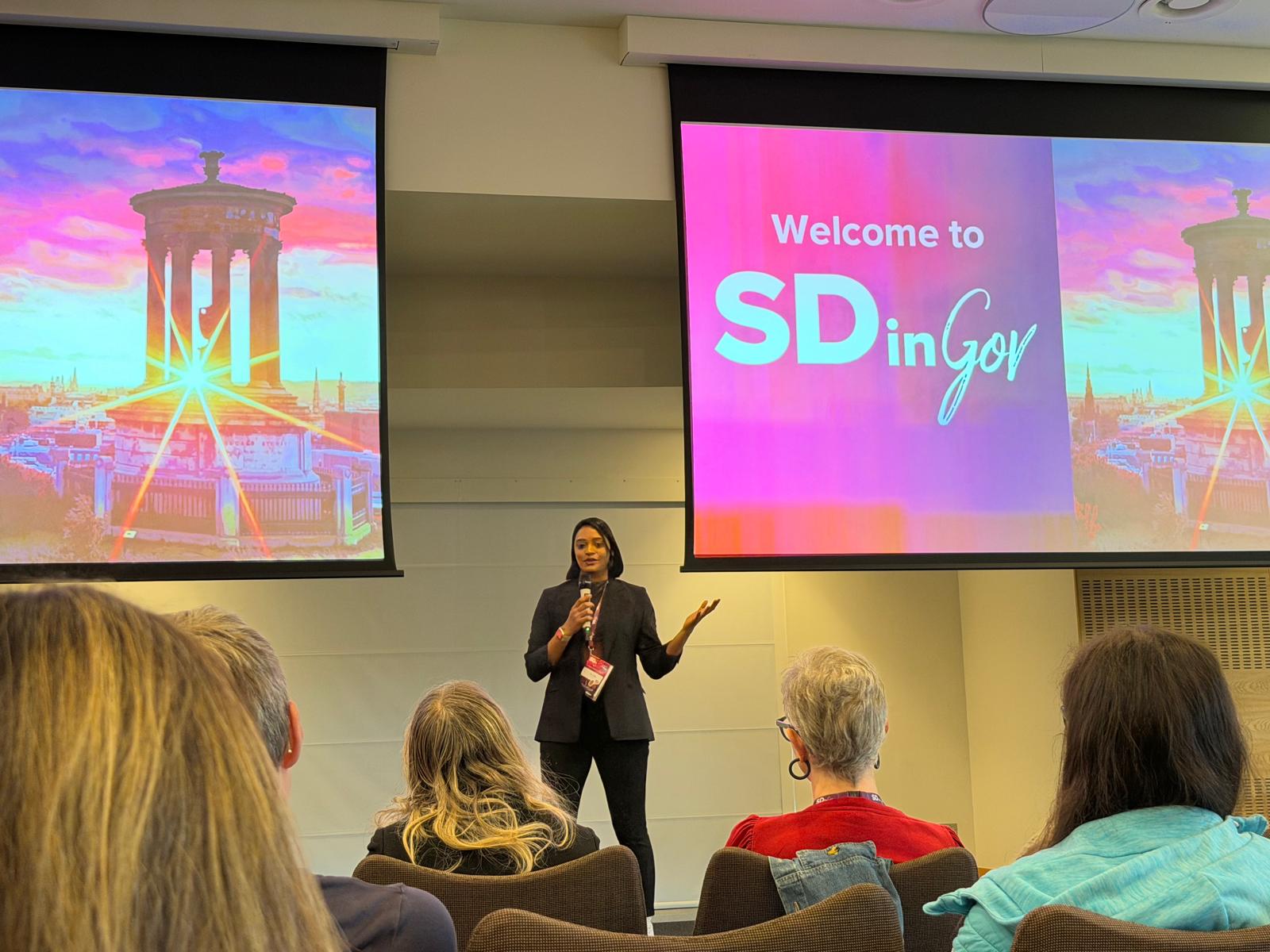
As ideas were gathered, a clear theme began to emerge.
Many focused on removing barriers, improving communication and helping people participate more fully in the services and organisations around them.
Interestingly, the conference itself reflected many of those same principles.
Service Design Tutor Sumita Kunashakaran later reflected on some of the thoughtful details that helped make the event more inclusive:
LEGO on tables to support different ways of thinking and engaging, communication stickers that helped people share how they preferred to interact, gender-neutral facilities, a dedicated prayer and reflection space, and a giant communal jigsaw puzzle that created opportunities for connection without the pressure of introductions or small talk.
None of these ideas were particularly complicated.
Yet each recognised an important truth: people learn, communicate, process information and participate differently.
And that’s what struck us most. Building inclusion doesn’t always require grand gestures. Sometimes it’s a quiet room. Sometimes it’s something to do with your hands. Sometimes it’s creating opportunities for people to connect in ways that feel comfortable to them.
In many ways, that’s what service design is all about.
We expected process improvement. We got culture.
Looking back at the responses, one finding stood out above all others:
We expected process improvement. We got culture.
Going into the activity, it would have been easy to assume people would talk about systems, technology, automation or large-scale transformation.
Instead, the ideas repeatedly centred on communication, inclusion, accessibility, learning, listening and decision-making.
The strongest suggestions weren’t necessarily about changing systems. They were about improving people’s experiences within those systems.
That’s an important lesson for organisations of all sizes.
When we think about improvement, it’s easy to jump straight to technology, processes and new tools. Yet many of the barriers people experience every day are cultural rather than technical. They stem from communication gaps, inaccessible environments, unclear expectations or simply not being asked for their perspective.
The Potato Ideas reminded us that meaningful change often starts with understanding people.
What employers can learn
For employers, the findings offer several practical lessons.
Small changes can create significant impact
Not every improvement requires a transformation programme, substantial investment or a complete redesign of existing processes. Some of the most effective changes are simple, practical and inexpensive to implement.
Your people often know what needs fixing
The individuals closest to a service or process are usually the first to spot barriers, frustrations and opportunities for improvement. Creating space for those ideas can uncover valuable insights that might otherwise be missed.
Inclusion is built through everyday decisions
Many of the examples that resonated most strongly during SDinGov weren’t expensive initiatives. They were thoughtful adjustments that helped more people participate, contribute and succeed.
Culture matters
The Potato Ideas showed that communication, belonging, accessibility and feeling listened to aren’t “nice to haves”. They shape how people experience organisations, services and workplaces every day.
These are exactly the kinds of challenges Service Designers help organisations address.
Through our Level 6 Service Designer apprenticeship, professionals develop the skills to understand user needs, identify opportunities for improvement and design services that work better for the people who use them.
Our Service Designer apprentices have worked across organisations including HM Revenue & Customs, Birmingham City Council, Devon County Council, Dorset Council, the Royal Borough of Kensington and Chelsea and North Yorkshire Council, putting those skills into practice in real working environments.
What happens next?
What started as a conference activity became a conversation starter, a collection of ideas and ultimately the Potato Ideas Report.
More importantly, it opened up a wider conversation about how organisations create change and how ideas get heard.
The challenge now isn’t just collecting Potato Ideas. It’s putting them into practice.
Because meaningful change doesn’t always begin with a major project.
Sometimes it starts with one removed barrier.
One more meaningful conversation.
One small improvement.
One Potato Idea.
Why not ask your team: What’s your Potato Idea?
The people closest to the work are often the first to spot what could be improved.
We’d love to hear the ideas that emerge.
FAQs
Sources:
SDinGov 2026 Conference – insights, presentations and discussions on service design, inclusive design and public sector innovation.
The Potato Ideas Report – collection of “potato ideas” gathered and shared during SDinGov 2026, highlighting small changes that can create meaningful impact.