The UK Screen Investment Summit 2025 Programme
The inaugural UK Screen Investment Summit, held at BAFTA 195 Piccadilly, brought together leading voices from across film, television, skills, investment, local authorities and national policy.
As the flagship convening of the UK Screen Investment Programme, the Summit set out a bold agenda for accelerating growth across the country’s creative industries, from infrastructure and innovation to talent pipelines, supply chains and regional development.

The programme explored the sector’s biggest opportunities and pressure points: the impact of tax incentives, the urgency of skills alignment, sustainable production and the deep interconnections between creative industries, hospitality, energy, housing and futureproof infrastructure. Collectively, the sessions illustrated how the Industrial Strategy and Creative Industries Sector Plan are beginning to shape a joined-up approach to UK screen-sector expansion.
Below is an overview of the day, including highlights from our Group CEO, Richard Goodwin, who joined the Skills panel on behalf of sponsor, the Mayor’s Academy Programme West London Film & TV Skills Hub (supported by the Mayor of London) alongside several other panellists.
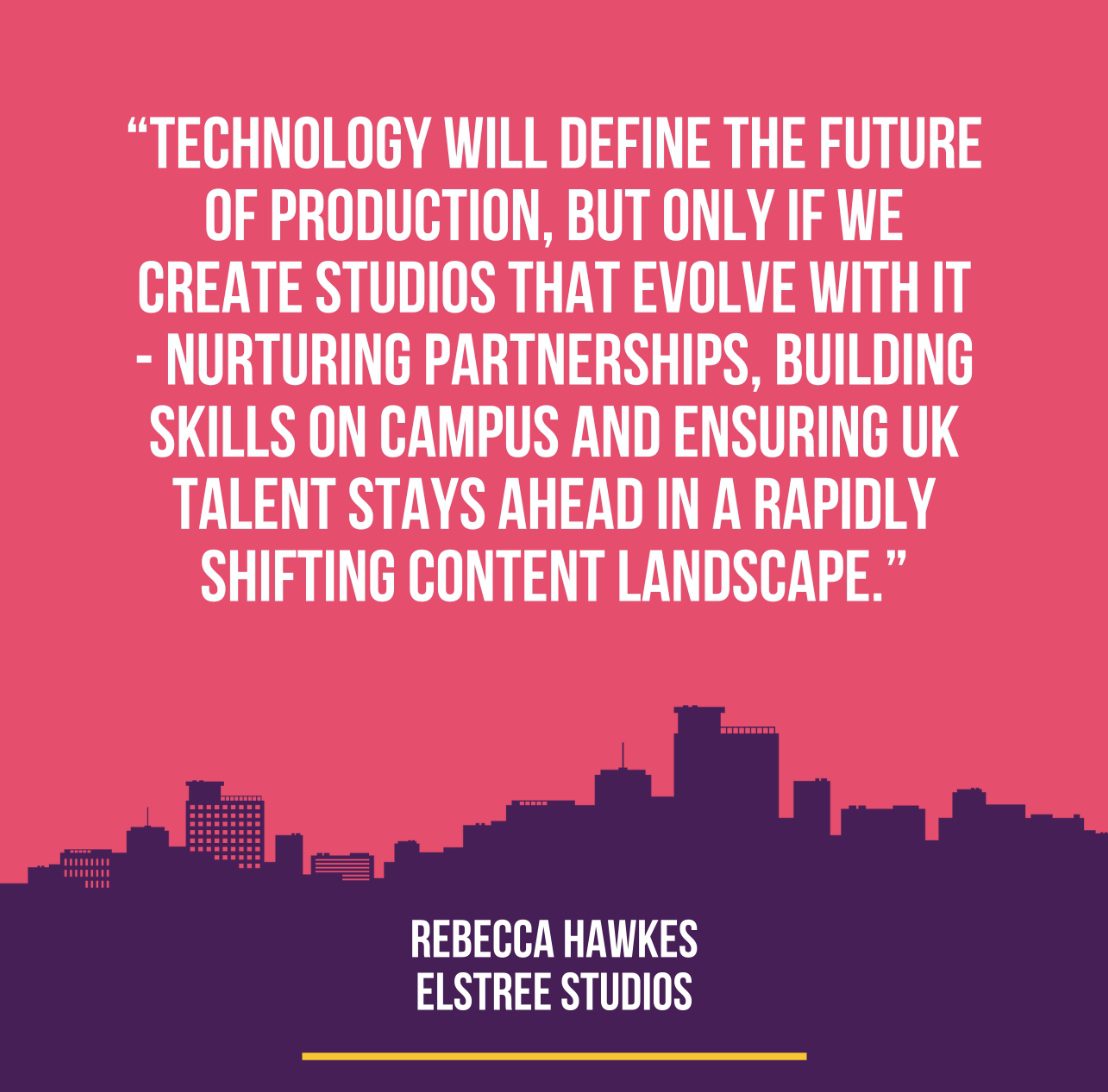
Homegrown & Hired: Aligning Skills with Industry Needs
One of the most anticipated sessions, Homegrown and Hired, chaired by Dr Stephen Partridge (University of Hertfordshire), focused on the urgent realities facing the UK’s film and TV workforce. With production evolving at speed, speakers emphasised the need for flexible, job-focused and multi-disciplinary training that equips people to thrive in modern, tech-driven production environments.
Representing the JGA Group, Richard called for stronger alignment between employers, training providers and local authorities
“Devolution and job-focused training are reshaping skills: if employers tap into local authority support, we can upskill the workforce quickly, fill shortages, and give freelancers the multi-disciplinary edge modern production demands.”
Richard’s comments reflected the JGA Group’s ongoing work across screen-sector bootcamps, industry-led qualifications and employer partnerships. resonated with both policymakers and studio representatives in the room.
Attending the session as guests of the West London Film & TV Hub were:
- Andrew Dakers (West London Business)
- Chris Skarratt (West London Film & TV Skills Hub Ambassador)
- Emmanuel Oloruntola (Principal Project Officer, Greater London Authority)
- John Brennan (Co-Chair, West London Employment & Skills Board)
- Prof. Emily Caston (University of West London)
- Sandra Robins (London Borough of Hillingdon)

Their presence highlighted the importance of cross-regional collaboration, particularly in West London (one of the UK’s fastest-growing creative clusters!).
Financing UK Content: Where Ambition Meets Capital
The next session, chaired by Debbie Manners, tackled one of the sector’s hardest challenges: sustaining domestic content creation in a shifting global market.
Jimmy Mulville (Hat Trick Productions) made a compelling case for empowering local ecosystems:
“Liverpool’s creative future lies in keeping value local — building the space, skills and long-term infrastructure so that stories made in the city are powered by its own workforce and investment, not talent and money leaking out.”
The conversation underscored how local capacity-building – from smaller studios to community supported skills projects, is increasingly central to the UK’s competitive advantage.
Keynote: AI, Creativity and the Realities of Production
A late-morning keynote from Guy Gadney (Charismatic.ai) explored the real-world impact of AI on the creative process. Dispelling common fears, he argued that AI should be seen as a strategic enabler rather than a creative threat:

“AI isn’t a magic button that replaces creativity – it’s the lifeboat that lets UK producers test ideas faster, cut costs responsibly and unlock stories and voices we’ve never been able to reach.”

The Ripple Effect: Screen-Led Growth Beyond Production
The final morning session, chaired by David Cordery (Trowers & Hamlins), explored the wider economic and social footprint of the screen industries. Adam Morley (Hertfordshire Futures) emphasised the need for film and TV to connect with local education, talent development and long-term regional planning:
“Screen-led growth isn’t just about studios or productions – it’s about creating real-life career pathways and multi-generational opportunities that connect talent, education, and local communities.”
Paul Westwood (RIOS) echoed this, noting that embedding studios into local urban contexts can transform them into engines of inclusive economic growth.
Why This Summit Matters
With the UK competing in an increasingly global content marketplace, the Summit reinforced a shared belief: growth will be driven by collaboration. Whether through skills alignment, smarter use of tax incentives, diversified funding models or strategic regional development, the industry must act in unison – across studios, educators, local authorities, supply chains and policymakers.
Richard’s contribution and the involvement of our Mayor’s Academy Programme West London Film & TV Skills Hub team, helped highlight how workforce development sits at the centre of this transformation. As the UK Screen Investment Programme continues into 2026, the insights generated at BAFTA set a strong foundation for the sector’s next phase of sustainable, inclusive growth.